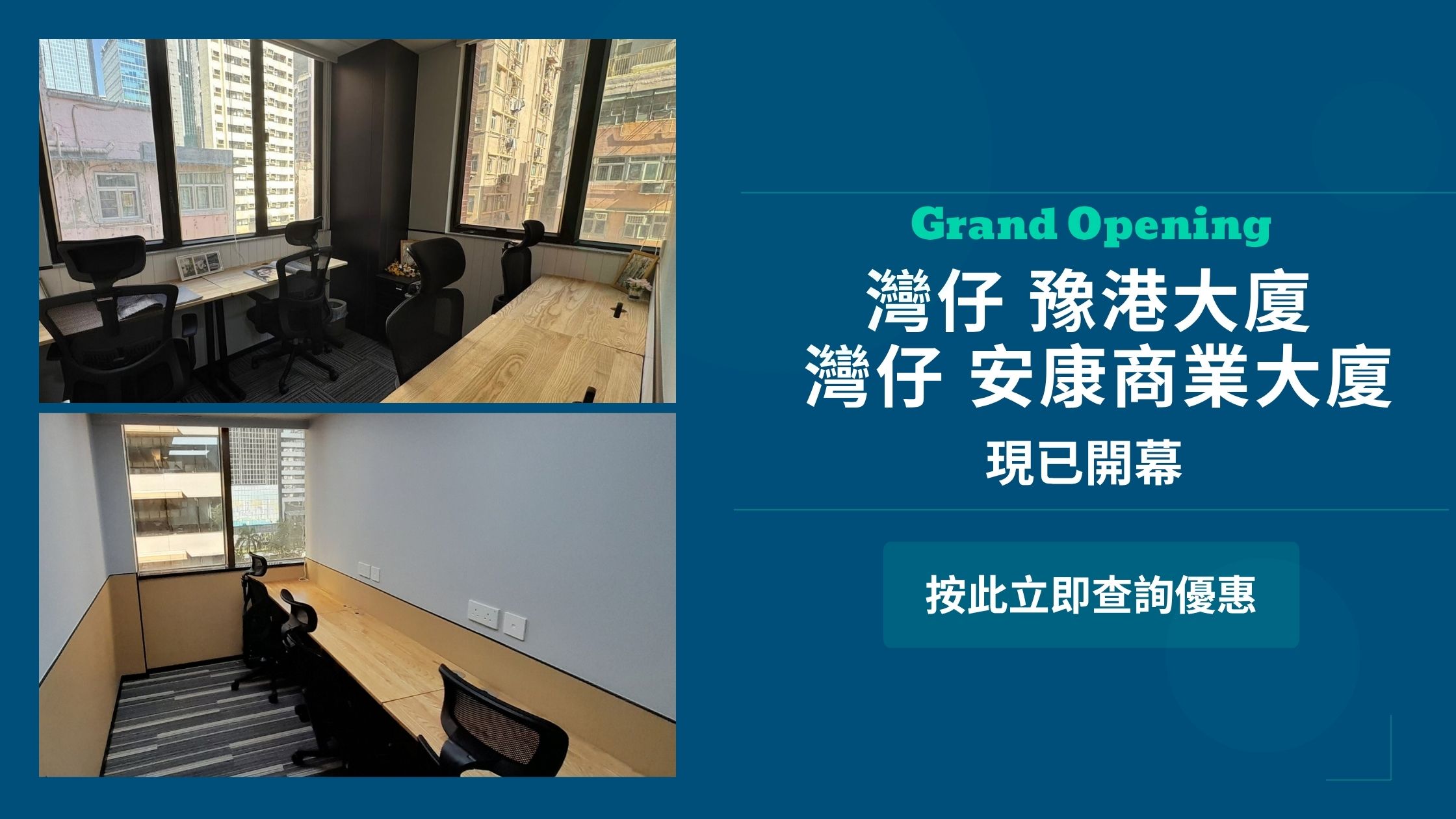


For professionals such as lawyers, accountants, designers, and consultants, an office is far more than just a place to set up a desk. It serves as the frontline for showcasing brand professionalism, a fortress for protecting client privacy, and a vital productivity tool to boost workflow efficiency.
However, many entrepreneurs focus solely on rent and interior design when leasing an office, overlooking the profound impact that different workplace models can have on daily business operations. In this article, Capital Business Centre explores the two most popular workplace models today: Serviced Offices and Coworking Spaces. The differences between them extend far beyond pricing and layout—they directly impact business growth, client trust, and professional reputation.
While both options fall under the umbrella of “flexible workspace,” making an accurate decision requires understanding their fundamental differences in spatial design, operational models, and core values:
|
Serviced Office |
Coworking Space |
|
|
Core Positioning |
Offers private, independent office spaces fully equipped with business amenities like dedicated meeting rooms, receptionists, mail handling, and telephone secretarial services. |
Focuses on open-plan spaces, emphasizing flexibility and community interaction. |
|
Privacy Level |
High: Provides secure, lockable private spaces to protect commercial secrets. |
Low: Open environments mean conversations and work are easily disrupted. |
|
Professional Image |
Excellent: Typically located in prime Hong Kong Central Business Districts (CBDs), featuring dedicated company signage and professional reception services. |
Average: Offers a relaxed, lively atmosphere ideal for creative industries, but does little to enhance the image of traditional professional services. |
|
Rental Costs |
Higher: Usually all-inclusive of furniture, utilities, management fees, and secretarial services. |
Lower: Flexible pricing but covers basic amenities only; extra services like meeting rooms incur additional charges. |
|
Lease Flexibility |
Medium: Generally requires a longer commitment (e.g., one year), though still much more flexible than traditional leases. |
Very High: Can be rented by the hour, day, or month—ideal for short-term or ad-hoc projects. |
|
Community Networking |
Low: Tenants focus on their own businesses, leading to limited interaction with others. |
Rich: Emphasizes community building, which is excellent for networking and finding collaborative opportunities. |
|
Amenities & Infrastructure |
Comprehensive: Dedicated office furniture, meeting rooms, pantries, and professional front-desk support. |
Basic: Shared desks, Wi-Fi, and printing equipment; meeting rooms usually require advance booking and extra fees. |
For lawyers, accountants, and senior consultants, time is money and trust is the ultimate lifeline. From this perspective, serviced offices provide decisive advantages that coworking spaces simply cannot match:
Client Trust: Business Centres Accelerate Professional Branding
Picture this: your client—perhaps a listed company director preparing to sign an important contract, or a trustee handling sensitive assets—arrives at your office.
If they are greeted by a coffee-shop vibe with loud pop music, startup employees playing ping-pong in shorts, and a transparent meeting room reachable only by weaving through rows of hot desks, doubt will inevitably creep in: “Is this firm stable enough? Is my data secure here?”
In contrast, at a premium serviced office, clients step into a sophisticated, calm lobby. They are politely greeted by a well-dressed secretary and guided to an elegant, soundproofed private meeting room. This visual and experiential professionalism builds immense brand credibility within the first 30 seconds of meeting.
Data Security & Confidentiality: An Uncompromising Baseline
In an era where cybersecurity and physical privacy are equally critical, professionals routinely handle trade secrets, Personal Data (Privacy) Ordinance (PDPO) materials, and sensitive financial statements.
In the open areas of a coworking space, phone conversations and sensitive screen data can easily be seen or overheard by strangers.
Within a serviced office, you benefit from solid physical partition walls and dedicated access control systems. You can even request independent network lines (IP) and private server racks, ensuring your clients’ data assets receive the highest tier of physical and digital protection.
Focus & Productivity: Eliminating Unnecessary Social Distractions
The “community networking” championed by coworking spaces can sometimes become a beautiful burden for professionals requiring deep concentration. Frequent community events and noise in common areas can easily disrupt meticulous legal research or detailed financial auditing.
A serviced office delivers a distraction-free environment. You retain full control over when to engage with the outside world, allowing you to channel 100% of your energy into creating value for your clients.
Below, Capital Business Centre provides specific workplace recommendations tailored to four classic professional sectors:
|
Professional Field |
Core Business Needs |
Recommended Workplace Model |
Key Workspace Keywords |
|
Legal Profession (Lawyers / Legal Advisors) |
High confidentiality, extensive physical document storage, regulatory compliance. |
Serviced Office (Top Choice) |
Highly soundproofed walls, file safes, Central/Admiralty locations, traditional lobby directory listing. |
|
Finance & Audit (Accountants / Tax Experts) |
Secure financial data, flexibility for seasonal staff expansion. |
Serviced Office (With Hot Desk add-ons) |
Private office for core team + flexible desks for interns/peak-season staff, dedicated server setup. |
|
Corporate Consulting (Management / HR Consultants) |
Frequent high-tier client meetings, flexible business travel, premium image. |
Premium Business Centre |
Executive lounge, high-end meeting rooms with video conferencing, secretarial reception. |
|
Creative & Design (Architects / Designers / Content Creators) |
Visual inspiration, cross-disciplinary collaboration, large desk spaces. |
Coworking Space (Private Office) |
Open discussion zones, sample/material storage space, community networking, design-forward communal areas. |
No matter which model fits your business best, avoid being swayed solely by trendy, “Instagrammable” decor when exploring Hong Kong office rentals. Ensure you rigorously evaluate these four core benchmarks during site visits:
1. Address & Accessibility
Your office location is a badge on your business card. For Hong Kong professionals, traditional Central Business Districts (CBDs) like Central, Admiralty, Wan Chai, and Tsim Sha Tsui still carry irreplaceable prestige. Additionally, consider:
Is it convenient for clients to visit? Is there ample parking nearby, or is it close to an MTR station?
For lawyers, is the office within walking distance of the High Court or relevant government departments?
2. Soundproofing & Meeting Room Booking Systems
This is a common pitfall encountered after signing a lease.
Test the soundproofing: During your viewing, step inside the private office, close the door, and have a colleague speak outside or next door to see how easily sound travels. If the soundproofing is poor, your client consultations will lack privacy.
Meeting room credits: Clarify how many free meeting room hours are included each month. Check whether booking via their app is seamless or if rooms are constantly unavailable.
3. Pricing Transparency & Hidden Costs
While flexible workspaces market themselves on “all-inclusive rent,” definitions of “all-inclusive” vary wildly. Before signing, confirm whether the following items incur extra charges:
Printing & Scanning: Are there free monthly allowances for black-and-white/color prints? What are the overage rates?
Internet & Telecoms: What is the base bandwidth? What are the fees for a dedicated IP or installing a private phone line?
Air Conditioning & Overtime Work: Many commercial buildings in Hong Kong turn off central air conditioning on weekday evenings and weekends. Does the centre offer 24/7 independent AC control? How is the overtime AC charge calculated?
4. Compliance & Business Registration Licensing
Certain regulated sectors (such as law firms, CPA practices, and licensed financial institutions) face strict legal requirements regarding office addresses when applying for or renewing licenses (e.g., requiring a distinct entrance or an official company signboard). Before committing to a business centre, verify with the operator that the space complies with all relevant statutory regulations to avoid registration issues down the line.
For professionals striving for excellence, an office is not just an operational cost—it is a high-return investment in your brand. While coworking spaces bring energy to startups and creatives, a serviced office (business centre) remains the premier, tailor-made business solution for professionals who demand absolute privacy, client trust, and peak operational efficiency.