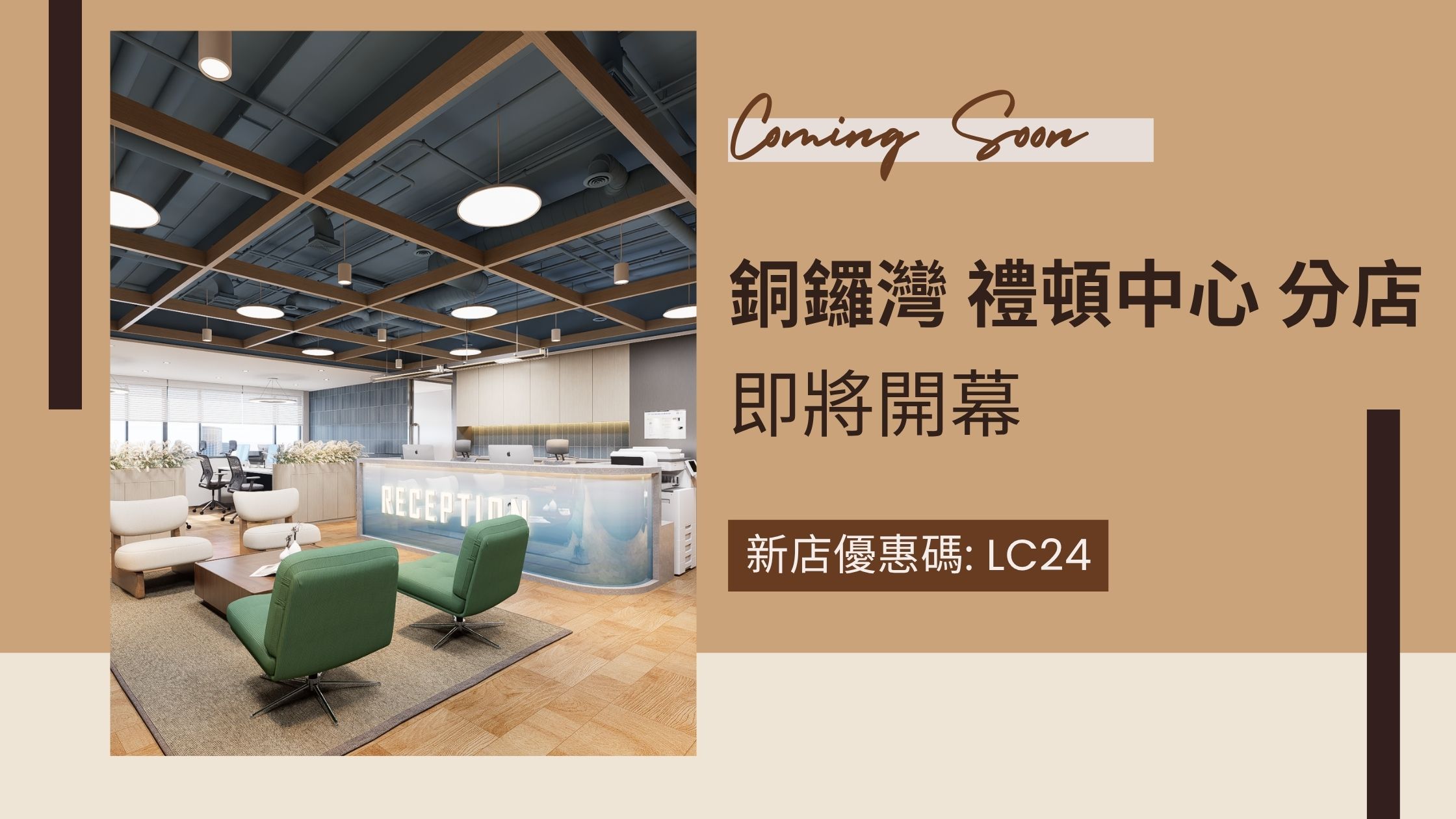


During a company’s growth journey, the choice of office space directly impacts cost structure, operational velocity, and team culture. For startups or small-to-medium enterprises in their growth phase, transitioning from a business center to leased office space has become a common and practical expansion strategy.
This phased approach helps reduce capital expenditure in the early stages, offers high flexibility, and enables rapid setup. When the company reaches certain milestones of scale and stability, moving to a leased office allows for long-term cost optimization and brand image enhancement.
But the question is: when is the right time to make the switch?
Before discussing the optimal transition timing, we must first understand the essential differences between these two types of office space. They are not “good versus bad” but rather the best solutions for different stages of a company’s development.
Business center: built for flexibility and efficiency
A business center is a “ready-to-use” office space solution. Its core features include:
Short-term / flexible contracts: Lease terms can start from one month, with some even supporting daily rates, significantly reducing the risk of long-term commitments.
Fully furnished and equipped: Desks, meeting rooms, internet, printers, pantries, etc., are all provided, allowing operations to begin on day one.
Administrative support: Services such as reception, mail handling, and telephone secretaries are included, saving the cost of hiring in-house staff.
Virtual office options: If the team doesn’t yet need physical seating, companies can rent just a business address and phone service, maintaining a corporate image at minimal cost.
For startup teams or multinational companies entering a local market, the core value of a business center lies in “converting fixed costs into variable costs,” allowing capital to be more flexibly allocated to product development and market validation.
Leased office: built for scale and autonomy
Traditional leased office space operates on a completely different logic. It typically has the following characteristics:
Long-term lease or purchase: Lease terms often start at 2–5 years, with some landlords requiring commitments of 3+ years. Tenants also bear additional costs such as management fees, utilities, and air conditioning.
Customizable space: Offices can be partitioned, renovated, and wired for internet and power according to the company’s needs, creating a tailored work environment.
Lower unit cost (at scale): When employee count exceeds a certain threshold, the per-square-foot rent for leased offices is typically lower than that of business centers.
Brand image: A private entrance, dedicated signage, and a freely designable reception area help build a professional and stable corporate image.
In other words, a leased office is an important piece of infrastructure for a company moving “from survival to growth.” However, it also tests the company’s cash flow stability and long-term planning capabilities.
Many entrepreneurs ask: “Since leased offices have a lower unit cost, why not rent one directly?” The answer is that in the early stages, a company’s biggest cost is often not rent, but “uncertainty.”
Lower upfront costs and risks
Renting a leased office typically requires a deposit of 2–3 months’ rent, plus renovation costs, furniture purchases, network cabling, etc. For a 30-person office, upfront costs can easily reach tens of thousands or even hundreds of thousands. A business center usually requires only a one-month deposit and no renovation, greatly reducing financial pressure.
Fast setup and operational flexibility
From signing to moving in, a business center can be ready within 3 days; a leased office often requires 1–3 months for renovation and preparation. For teams needing to quickly validate their business model, time is the greatest competitive advantage.
Test the market and team dynamics
Are you certain your current team size will continue to grow? Are you certain your business model will still hold six months from now? A business center’s short-term lease lets you shoot first and aim later—validate the market before deciding to scale up.
Administrative support and corporate image
For micro-teams of just 3–5 people, the professional reception and meeting room services provided by a business center often give clients a more “legitimate company” impression than renting a small office on their own. This is why many freelancers and consulting firms prefer business centers.
As a company gradually stabilizes and space needs shift from “flexibility” to “stability,” an objective set of evaluation criteria is needed to determine the transition timing. These can be divided into quantitative metrics and non-financial indicators.
Quantifiable metrics (KPIs)
Employee count threshold: When the team consistently reaches a certain size (e.g., 30–50+ people, depending on industry and seating density), the economics of renting an entire floor become apparent.
Stable revenue and profit: The company’s revenue is growing steadily with stable gross margins, allowing it to bear longer-term fixed costs. A good indicator is “6–12 consecutive months of revenue meeting a baseline.”
Rent-to-revenue ratio: When rent as a percentage of revenue falls below an acceptable threshold (e.g., <8–12%), the company has financial room to take on a long-term lease.
Budget and cash flow safety margin: Use cash flow modeling (see cost model below) to ensure the company can afford moving and renovation costs even in conservative scenarios.
Non-financial indicators
Brand image and client needs: If the business requires a fixed showroom or frequent client entertainment, having a self-managed leased office enhances brand consistency.
Team culture and space management needs: The company has established a clear culture and collaboration processes that require a self-managed space for training, meetings, and internal events.
Special equipment or security requirements: If the business needs fixed equipment, server rooms, or specific security controls, a business center may not suffice.
Long-term site or R&D needs: If the company has manufacturing or R&D needs requiring larger or modifiable space.
Switching office space is more than just moving—it involves finance, legal, IT, HR, and other areas. It is recommended to break the process into four phases:
Phase 1: Evaluation and planning (months 0–6)
Create a “transition readiness checklist” incorporating the quantitative and non-quantitative indicators above, and assess it regularly (e.g., quarterly).
Start monitoring leased office rates in target areas to understand average rent, management fees, deposit terms, and lease duration requirements.
Discuss with your accountant: The tax implications and procedures for changing your company’s registered address when moving from a business center to a leased office.
Phase 2: Trial operation (months 6–18)
Keep the business center as the main base, but begin experimenting with a hybrid model—e.g., use a virtual office from the business center for registration, while renting a small leased office as the team’s primary workspace.
Test employee commute willingness and satisfaction with local amenities.
Gradually build internal SOPs to prepare management for a larger, independent space.
Phase 3: Expansion evaluation and decision point (months 18–36)
This is the most critical transition window. Most successful companies make the decision between 18 and 24 months after moving into a business center.
If employee count continues to grow and finances are stable, initiate the search for a leased office.
Plan for at least a 3–6 month overlap period (paying rent for both the business center and the new leased office) to ensure the move doesn’t disrupt daily operations.
Negotiate lease termination terms with the landlord, paying attention to any early termination penalties.
Phase 4: Relocation and integration
During the actual move, pay attention to the following details:
Renovation planning: Leased office renovations typically take 1–3 months—make sure to include this in the project timeline.
IT and asset transfer: Internet, phone systems, servers, and access control systems need to be moved and tested. It is recommended to hire professional IT vendors.
Address and tax changes: Update the address with tax authorities, banks, clients, suppliers, and government agencies. Business centers often provide an “address change grace period” that can be useful.
Cultural transition: Moving from a shared space to a private office may require employees to adjust to differences like “no front desk to receive mail” or “no one to take out the trash.” Plan for a 1–2 week adjustment period with internal communication.
Q1: Is business center rent more expensive than leased office rent?
In the short term, yes; in the long term, not necessarily. On a per-ping (unit area) basis, business centers are typically 30–50% more expensive than leased offices in the same area. However, that price includes utilities, internet, management fees, cleaning, furniture, and meeting room usage. When all hidden costs of a leased office (renovation, furniture, management fees, utilities, phone systems, etc.) are added up, the total cost of a business center is actually lower when employee count is under 10.
Q2: When should we consider buying an office instead of leasing?
Buying an office is a capital expenditure, which follows a completely different decision logic from leasing (an operating expense). Generally, companies should consider buying only when all the following conditions are met:
– Consistent profitability for over 3 years
– Expected to operate at the same location for 7–10+ years
– Sufficient own capital, and purchase won’t impact working capital
– The property has long-term value retention or appreciation potential in that area
Until then, leasing remains the most flexible and risk-controlled option.
Q3: What legal or tax issues might arise when moving from a business center to a leased office?
Three main points to consider:
– Company registered address change: Must be filed with the competent authority (e.g., Ministry of Economic Affairs) within 15 days of the move; otherwise, fines may apply.
– Lease contract details: In a long-term leased office contract, be sure to check “early termination clauses,” “renewal priority rights,” and “rent-free renovation periods.”
– Invoicing and tax registration: If moving across cities or counties, the tax registration number may change—consult your accountant in advance.
Q4: Can we keep both a business center and a leased office?
Absolutely. In fact, this is the “dual-location strategy” adopted by many growing companies. For example:
– Use the leased office as headquarters and main workspace
– Keep a virtual office or small presence at the business center for client meetings, cross-regional business bases, or overseas branch registration
This model is particularly suitable for companies with decentralized operations or multiple locations.
“Business center first, leased office later” is not just a spatial strategy—it’s a mindset for managing the rhythm of corporate growth. It acknowledges one thing: no one can accurately predict team size and space needs three years in advance on day one of starting a business.
The real key is not “whether to transition,” but whether you have established an objective, actionable decision-making mechanism to recognize the signals at the right time and complete the transition smoothly.
If you need assistance in developing a tailored expansion plan or finding a location, the professional team at Capital Business Center provides one-on-one consulting and full execution services.