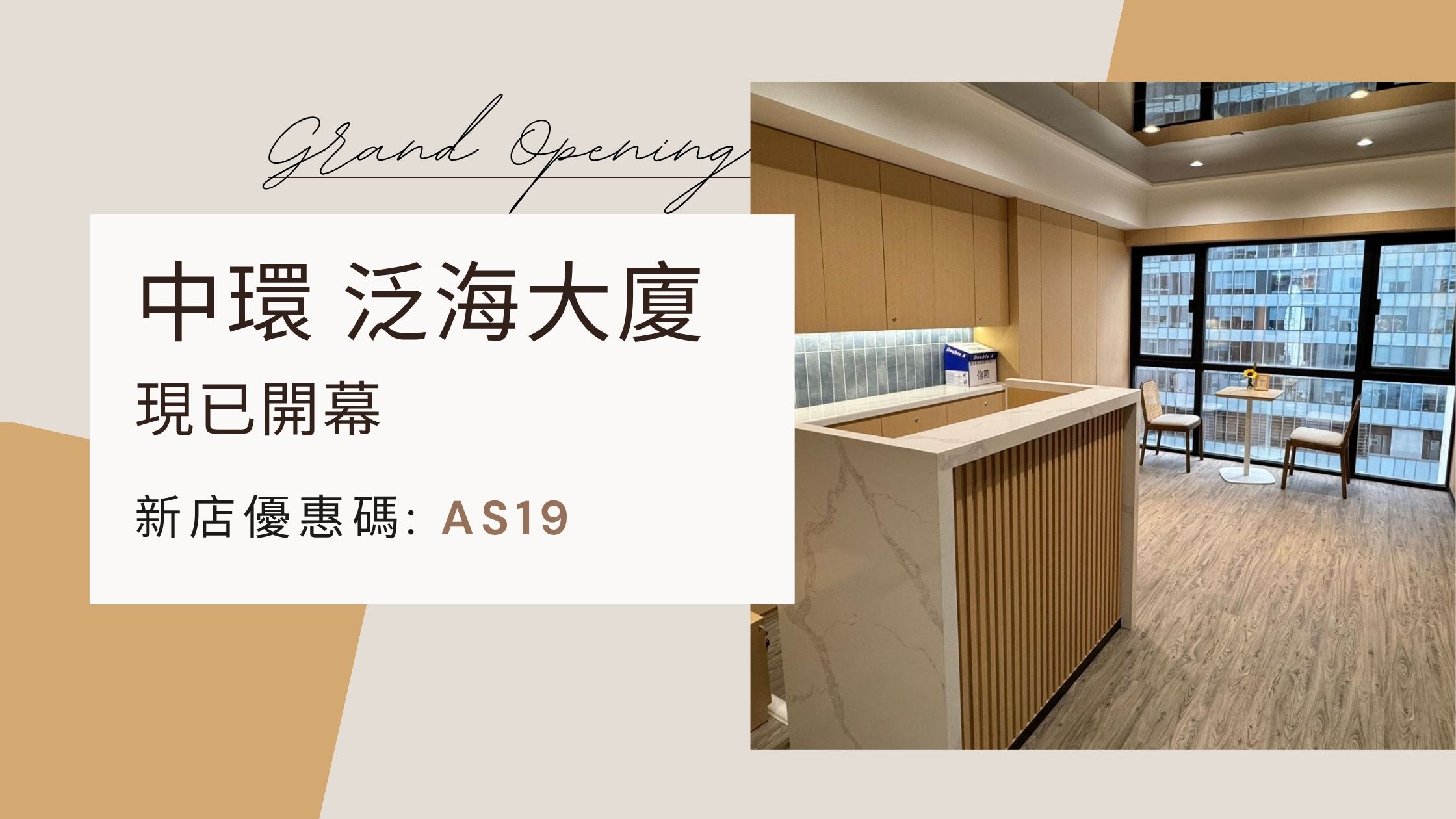


In Hong Kong, where space is at a premium and the office market shifts rapidly, more and more companies are rethinking the question: “Do we really need to rent an entire floor in a traditional office building?” With the rise of start‑ups, flexible work models, and mounting cost pressures, “mini offices” and “compact office suites” are entering the mainstream and becoming a new workspace option for many SMEs and freelancers.
These spaces not only allow you to build a professional presence at a much lower overall cost, but also offer convenient locations, flexible lease terms and comprehensive facilities, so companies can focus resources on what truly matters: products, services and the market.
Let’s start with the bigger picture. In recent years, office supply in Hong Kong has increased, while companies are placing more emphasis on “space efficiency” and “rental flexibility”. Against this backdrop, small, flexible and multi‑functional mini offices have naturally become highly sought after.
Instead of tying themselves down to multi‑year leases on large floor plates, many companies now prefer compact office suites that can be rented on a monthly, quarterly or even short‑term basis, easing the impact of economic fluctuations on cash flow. This model is especially ideal for start‑up teams testing the waters or newly established Hong Kong branches of overseas firms.
From an operational standpoint, mini offices offer several obvious advantages:
– You can adjust your office size as the company grows, without committing to a large space for many years in one go.
– By sharing facilities and centralising management, you can lower the average cost per workstation.
– The leasing process is streamlined; in many cases you can “just bring your laptop and start working”, which cuts down on renovation and setup time.
The core value of a mini office lies in “using just‑right space to do just‑right work”. The following features help you quickly grasp how it differs from a traditional office.
1) Flexible space: scale with your team
Mini offices are generally smaller in area, but the layout is more efficient, for example:
– You can upgrade from a 1–2 person room to a 6–10 person room as your team grows.
– Some operators offer “internal room‑switching” within the same centre, making it easy for companies to expand or downsize.
– Leases are often available on a monthly or other short‑term basis, reducing long‑term fixed commitments.
This level of flexibility is particularly attractive to teams that are still in trial operation or still estimating future headcount needs.
2) Fully equipped: plug‑and‑play, one‑stop setup
Most mini offices and compact office suites are “fully fitted out” and commonly include:
– Basic furniture such as desks, chairs and storage cabinets
– Stable high‑speed Wi‑Fi and wired internet
– Meeting rooms and discussion rooms (bookable by hours or quota)
– Photocopying, printing, scanning and fax facilities
– Shared reception area and front desk, pantry and lounge areas
Tenants do not need to purchase hardware or deal with installation, which greatly reduces upfront investment and setup time.
3) Location advantage: in core business districts, closer to clients
One major selling point of compact office suites is that they are “small but well located”. Many of them are found in:
– Traditional CBDs such as Central, Admiralty and Wan Chai
– Transport hubs such as Tsim Sha Tsui and Mong Kok
– Emerging business districts such as Kowloon East or Island East
Such addresses help enhance your external corporate image, and allow staff and clients to reach the office conveniently via MTR and buses, saving commuting time.
4) Cost‑effective: no renovation, no management fees, no headaches
Compared with traditional offices, mini offices typically offer the following cost advantages:
– No need to pay huge renovation and furniture costs
– Rent often includes management fees, utilities and basic cleaning
– No need to hire your own reception or administrative staff
– You avoid paying high management and air‑conditioning charges on long‑term vacant space
As a result, you can enjoy a near “big‑company‑grade” office environment and facilities with more controllable fixed expenses.
If this is your first time renting a mini office, the following steps can serve as a practical guide.
Step 1: Assess your needs – be clear on what you want
Before you start searching, ask yourself a few questions:
– How many people are currently on your team, and what’s the projected headcount in six months to a year?
– How much space or how many seats do you need; do you require a private room?
– What is your budget range and desired upper limit for monthly rent?
– How long do you plan to use the space – for a short‑term project or as a medium‑ to long‑term base?
The clearer your criteria, the more you can narrow your search and save a great deal of time.
Step 2: Shortlist locations and budgets – compare different operators
Next, screen options through the following lenses:
– Location: core districts (e.g. Central, Tsim Sha Tsui) vs emerging areas (e.g. Kwun Tong, Quarry Bay)
– Price: whether the monthly rent is “all‑inclusive” and whether there are extra miscellaneous charges
– Facilities: number of meeting rooms, comfort of common areas, IT support, etc.
– Flexibility: how easy it is to change room types, add seats or adjust the lease term
It is advisable to compare several business centres or serviced office providers so you can find the option that best meets both your budget and your needs.
Step 3: Site visit and contract negotiation – feel the difference in person
Photos and website descriptions are always limited, so an on‑site visit is crucial:
– Experience the lighting, ventilation, foot traffic and noise levels of the space
– Ask about meeting‑room booking rules and any extra charges
– Confirm details such as internet speed, air‑conditioning hours and security systems
– Understand lease flexibility: whether you can switch room types and whether trial periods or short‑term options are available
During negotiations, make sure all verbal promises (such as rent discounts or free meeting‑room hours) are written into the contract to protect both parties’ interests.
Step 4: Signing and move‑in – just bring your laptop and get to work
After signing the contract and paying the deposit, you can usually move in within a short time, sometimes as soon as the next day. Since furniture and equipment are already in place, you typically only need to:
– Move in personal items and essential documents
– Set up your computers and systems
– Update your registered address and contact details externally
For teams that want to “hit the ground running”, mini offices can significantly shorten the setup timeline.
In theory, any company can use compact office suites, but the following types are especially suitable.
1) Start‑ups and freelancers
For early‑stage ventures or solo professionals:
– Capital is limited, but they need a decent space to meet clients
– Work patterns are flexible, and they want to avoid the risk of long‑term leases
– Headcount is small, so they do not actually need a large office
Mini offices provide a low‑cost, independent, quiet and professional work environment, which is far more suitable than a café or home for meeting clients and handling confidential information.
2) Overseas companies setting up a Hong Kong branch
For overseas firms entering the Hong Kong market for the first time:
– They need a formal office and registered address
– They wish to land quickly and minimise setup time
– They may not yet be able to accurately estimate long‑term staffing and space requirements
By choosing a compact office suite, they can establish a professional‑looking branch in a short time while retaining the flexibility to move to a larger space in the future.
3) Project‑based teams / short‑term collaboration units
For example, marketing project teams, consulting teams or cross‑company collaboration units that only operate for several months to a year:
– They are not suited to taking on long‑term traditional leases
– They need a fixed space for day‑to‑day collaboration and meetings
– Once the project ends, they can end the lease with no strings attached
Mini offices provide a “time‑limited” dedicated base that fits these needs perfectly.
4) SMEs in an upgrade phase
Some SMEs have outgrown working from home or from open coworking spaces, but do not yet need an entire large office floor:
– They want to enhance brand image and client trust
– They need a more stable, private independent space
– They are still testing their growth trajectory over the next few years
At this stage, choosing a compact office suite is a prudent transitional option, offering a professional front while preserving room to upgrade.
With so many options on the market, how do you choose wisely? Use the following points as a checklist.
1) Clarify whether the rent is “all‑inclusive”
Check whether the rent already covers:
– Management fees, air‑conditioning, utilities and cleaning
– Internet charges
– Use of communal areas and basic facilities
If there are additional fees (such as overtime air‑conditioning, extra cleaning or meeting‑room hours), you should find out in advance to avoid future budget gaps.
2) Review layout and expansion flexibility
– Does the seating layout match your team’s work habits (more storage, private rooms, etc.)?
– Can you move to larger or differently configured rooms within the same centre?
– Can you flexibly add or remove seats and set up visitor access?
If you expect significant expansion within a year, it is especially important to choose an operator with high flexibility.
3) Compare transport links and image in different districts
In Hong Kong, location affects not only commute times but also clients’ first impression of your brand. When choosing a location, consider:
– Proximity to MTR stations and major bus routes
– Where most of your clients and staff are based
– Whether the district matches your brand positioning (for example, financial firms often prefer core CBDs)
Sometimes, a slightly smaller mini office in a more prestigious area can actually be more beneficial for your overall image and business development.
4) Prioritise centres with shared facilities and flexible leases
The quality of shared facilities directly affects your daily work experience:
– Are there enough meeting rooms, and is it hard to book them?
– Are the common areas comfortable, safe and quiet?
– Do they provide business support services such as front‑desk reception and mail handling?
At the same time, flexible lease terms reduce business risk in uncertain times, allowing you to focus more confidently on running your company.
Q1: How are mini offices different from coworking spaces?
A1: Mini offices usually offer private rooms with higher privacy, suitable for companies with fixed teams, sensitive data or frequent client meetings, whereas coworking spaces are mostly open‑plan and emphasise community and flexibility.
Q2: Do I have to sign a long‑term contract to rent a compact office suite?
A2: Not necessarily. Many operators offer monthly or other short‑term leases, and some provide discounts for longer terms, so businesses can choose according to their own needs.
Q3: Can a mini office be used as a company’s registered address?
A3: Many business centres do provide a business registration address service for company registration and mail receipt, but tenants should confirm the specific terms and charges in advance.
Q4: If my company grows quickly, can I move to a larger unit at any time?
A4: It depends on the operator and current vacancy. Some centres offer “priority room upgrades” or “extra seat” arrangements, so it is best to ask about feasibility before signing the contract.
Q5: How secure are compact office suites?
A5: They usually have access‑control systems, CCTV and visitor registration, and some centres offer 24‑hour access. Security levels vary by site, so pay special attention during your visit.
If you are considering a mini office or compact office suite for your company, you can start with these three steps:
– List your team’s priorities in terms of location, budget, space size and lease term.
– Do an initial online comparison of several business centres or serviced offices and shortlist 2–3 that best match your criteria.
– Book site visits, experience the space and services in person, and then make your final decision.
By making good use of the flexibility of mini offices and compact office suites, you are not only saving on costs, but also adopting a long‑term strategy that helps your business stay agile and resilient in an uncertain environment.